What to actually test in seven days
A trial is short enough that testing the wrong things wastes it. Here is what to check on an AI email tool, in what order, and what to ignore.
5 min read
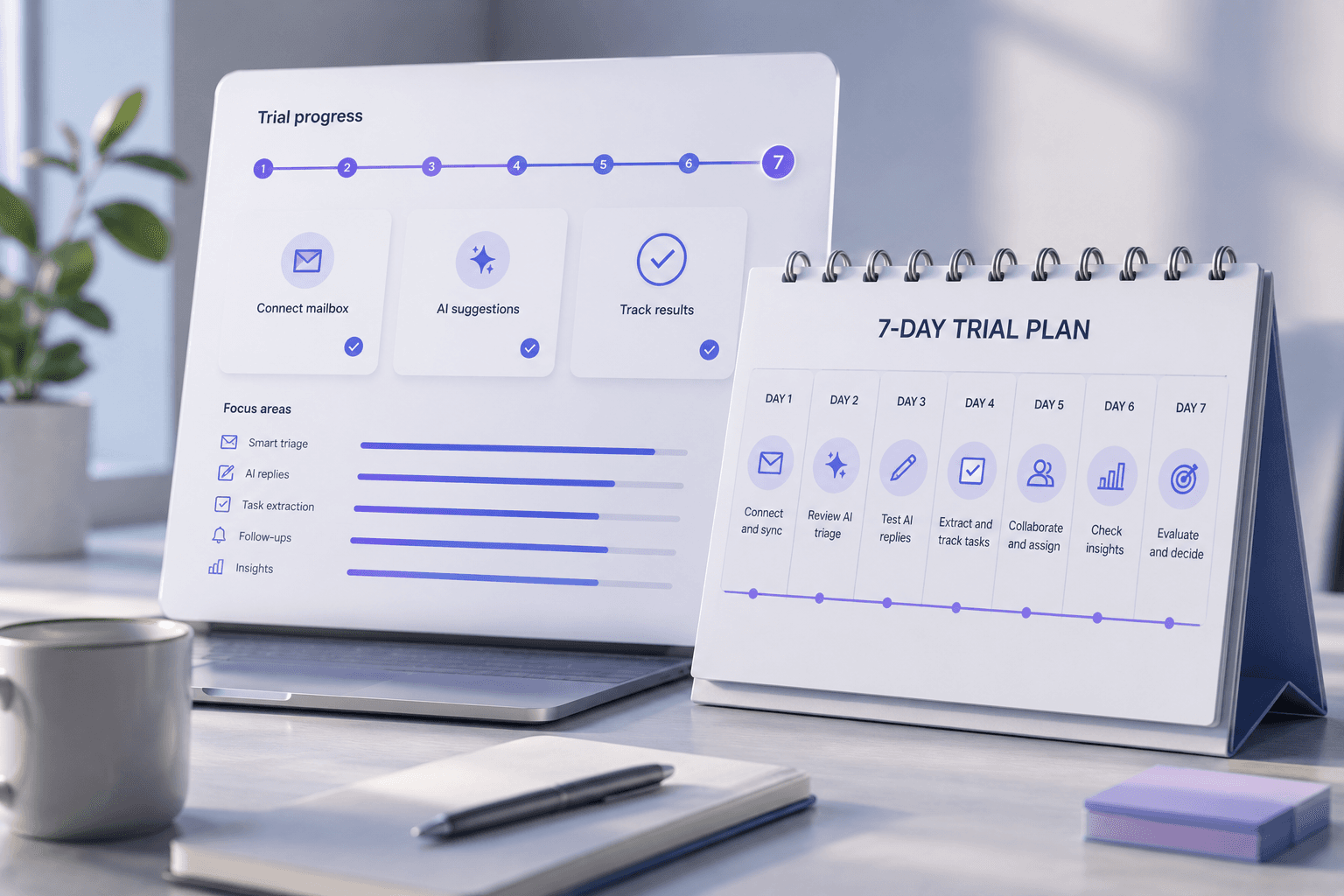
Most people spend a software trial confirming the product works. It almost always works. Demos are built from the cases the product handles well, and a week spent watching it handle those tells you nothing you did not already believe when you signed up.
A trial is better spent looking for the edges. Seven days is enough to find them if you go looking deliberately, and not enough if you wait for them to surface on their own.
Connect on day one, not day three
This sounds obvious and is the most common way a trial gets wasted. Any tool that reads your mail needs history before it has an opinion worth judging. CevroFlow backfills thirty days on the first sync, which means a mailbox connected on day four is being assessed on three days of context.
Connect immediately, then leave it alone for a few hours. What you are judging is the state it reaches on its own, not the state it is in thirty seconds after connecting.
Check the calls it gets wrong, not the ones it gets right
Open the messages it ranked highest and confirm they deserve it. That takes ten minutes and tells you the product is functioning.
Then do the harder thing: go to the bottom. Look at what it filed as low priority and ask whether anything there should have been higher. False negatives are the failure that costs you money, and they are invisible unless you go looking, because by definition nothing surfaced to tell you.
While you are there, check whether each call comes with a reason. A category with no stated basis is a verdict you cannot argue with. You want to be able to read why something was ranked where it was, disagree, and correct it.
Correct things, and see what happens next
Correcting a wrong call is not just cleanup. It is a test of whether the system learns in a way you can inspect.
Two questions matter. Does the correction stick, or does the same kind of message get miscategorised again next week? And when it does learn, can you see what it learned? A rule you can read and edit is a different proposition from a model that silently retrains and gives you no way to check what changed.
Worth knowing: correcting the same kind of message twice in CevroFlow prompts it to write an actual rule, which you can then read and edit. That is a deliberate choice over invisible retraining, on the grounds that you should be able to audit why your inbox behaves the way it does.
Send one real email through it
This is the test people skip, and it is the one that matters most.
Take a real message that needs a real reply, let the tool draft it, read the draft properly, and send it. Not a test message to yourself. An actual reply to an actual person.
You are checking three things. Does the draft know what was said earlier in the thread, or has it only read the last message. Does it sound like you or like a template. And when it does not know something, does it leave a visible gap or fill it with something plausible. That last one is the important one, because a confident invented detail reads as finished and goes out unchecked.
Ask what it cannot do
Before the week ends, find the limits, and prefer a vendor who has written them down. Every tool has edges and the ones that hide them are hiding something you will discover in week three of paying.
Concretely: does it need a calendar invite to detect a meeting, or can it read one agreed in prose. Does it work on mail older than the backfill window. Can it act on its own, and if so, what stops it.
What not to spend the week on
Do not spend it on volume. Processing a thousand messages proves throughput, which was never in doubt.
Do not spend it comparing feature lists. Every product in this category lists the same eight capabilities and the lists tell you nothing about whether any of them are good.
And do not spend it on the interface. You will adapt to a layout in a fortnight. You will not adapt to a tool that quietly buries an important message, because you will never find out it did.
The question at the end
On day seven, ask one thing: over this week, did it surface anything I would otherwise have missed, and did it hide anything I would otherwise have caught.
If the first answer is yes and the second is no, the tool is doing its job. If both are no, nothing has changed and you have your answer. Every trial here runs seven days with no card required, which is deliberately short enough that the question gets asked while the week is still fresh.
If you want to see the mechanism before you start, Smart Inbox covers the ranking and the reasons attached to it.